
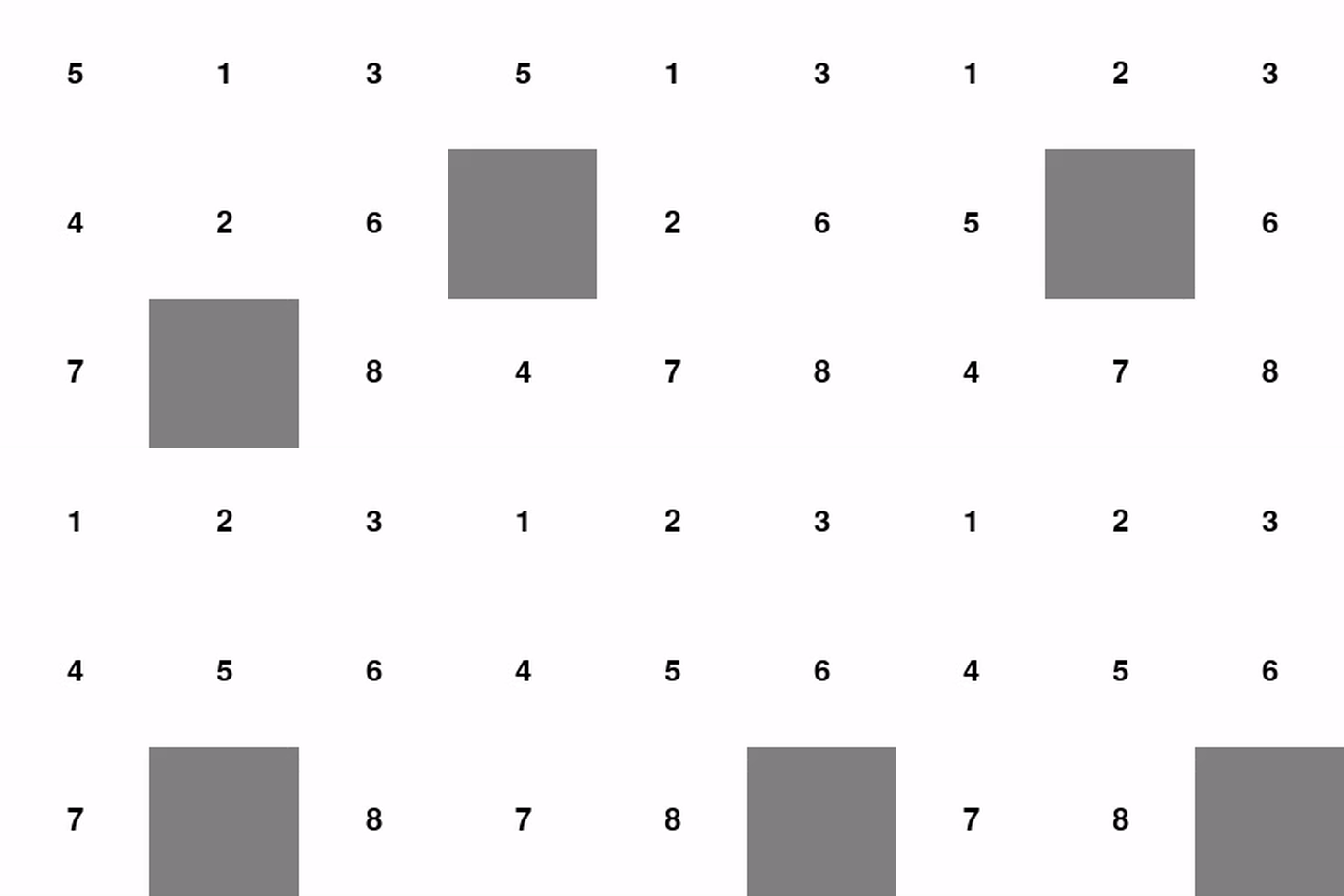
Overview
Complete implementation of the 8-puzzle problem solver using A* search algorithm with optimal path finding and visualization.
Problem Description
Classic sliding puzzle with:
- 3×3 grid with 8 numbered tiles and 1 blank space
- Goal: arrange tiles in order from 1-8
- Movement: slide adjacent tiles into blank space
- Challenge: finding optimal solution path
Algorithm Implementation
A Search with Manhattan Distance*
- Heuristic: Sum of Manhattan distances from goal state
- Open set: Priority queue (min f = g + h)
- Closed set: Visited states to prevent cycles
- Guarantees optimal solution path
Key Features
- ✅ Optimal path finding using A*
- ✅ Manhattan distance heuristic
- ✅ State space visualization
- ✅ Solution path animation
- ✅ Performance metrics (nodes explored, path length)
- ✅ Configurable initial states
Technical Stack
- Language: C++
- Algorithm: A* Search
- Heuristic: Manhattan Distance
- Data Structures: Priority Queue, Hash Set
- Visualization: Animation output
Getting Started
git clone https://github.com/svaibhav101/slide-8-puzzle.git
cd slide-8-puzzle && mkdir build && cd build
cmake .. && make
./puzzle_solver
Complexity Analysis
- Time: O(b^d) where b=branching factor, d=depth
- Space: O(b^d) for open/closed sets
- Optimality: Guaranteed with admissible heuristic
- Completeness: Always finds solution if exists
Use Cases
- Search algorithm learning
- Heuristic function design study
- Path planning fundamentals
- AI problem-solving demonstrations